🔒 Confidential — for invited investors only. Not an offer of securities.
The future of finance is a conversation.
TRUE is digital-asset infrastructure and a platform for tokenised finance: crypto, stocks, commodities, metals and FX. Fully on-chain, powered by Solana.
Built with and by AI, operated by 4 people and +400 AI tools.
★★★★★4.8on both stores
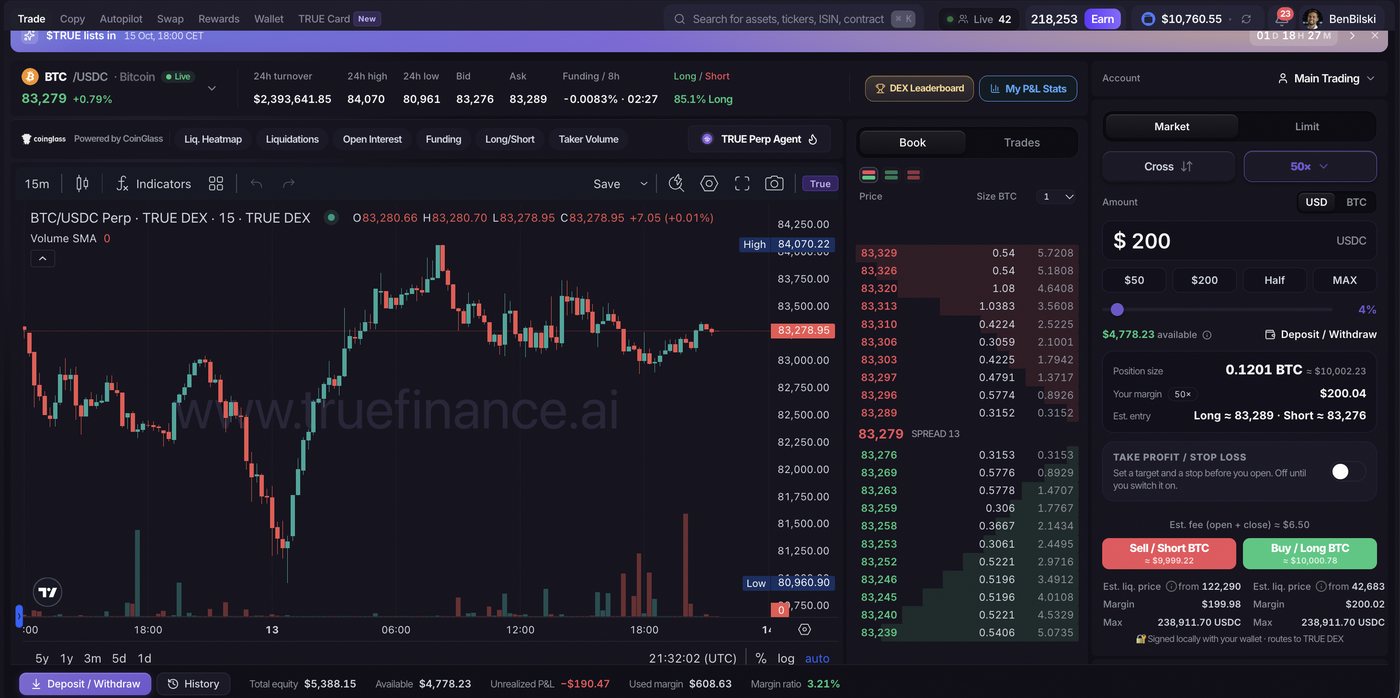
Recorded in the live app
Our mission · autonomous finance for everyone
We are the AI and we are the platform.
Non-custodialFully on-chainSecure
AI, trained over 1.5 years for one purpose: autonomous investing. An integration powerhouse. 100+ integrations into the world’s best data providers, chains and infrastructure, fused into one engine.
Our pathway to a $10B+ valuation
Shortly after launch, TRUE is already profitable, on the way to $1B a year.
The bars on the left are real. Q3 2026 brought $1.52M of revenue and $141k of operating profit, our first profitable quarter, and September was the best month at $160k. $1B of revenue a year puts TRUE at a $10B+ valuation on the multiples this sector already trades at.
RevenueOperating profitLossDashed = plan
Dec 2024founded
Apr 2026launched
Own labspecialised in financial LLMs and infrastructure
10×revenue growth, June to September
$8.3Mrun-rate, best month annualised
$160koperating profit, September
$1B+transacted since launch
19kaccounts · 5.6k monthly active
86%margin before growth spend
The total addressable market is in the trillions.
Two things are happening at once, and TRUE sits where they meet.
The lane is opening
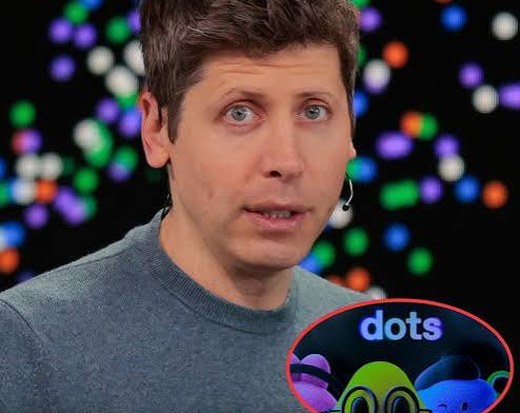
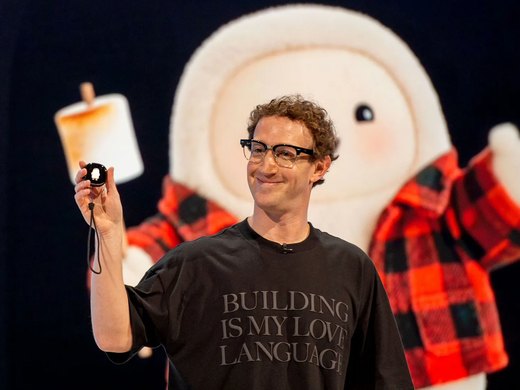
Trillion-dollar companies are betting on personal assistants.
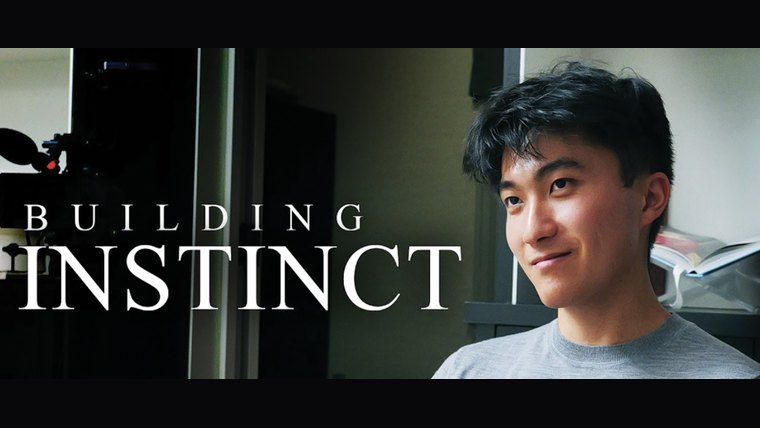
dots · OpenAIMuse · MetaInstinct · $1B at $10B
OpenAI and Meta are building the assistant for everyday life.
Instinct raised $1B at a $10B valuation for the general assistant.
TRUE AI covers the financial lane. We own the entire value chain. They do not.
The financial market is going on-chain
Two curves, both pointing the same way.
Tokenised assets on-chain~$2T50×by 2030, from $38.6B on 1 October 2026
The market for AI agents$52.6B10×by 2030, from $5.2B in 2024
Tokenised assets on-chain are projected to grow about fifty times by 2030, and the market for AI agents about tenfold over the same period. TRUE sits where the two meet: an AI that can act, on a venue that settles on-chain.
Independent products, shown for convenience. TRUE has no commercial relationship with any of them.
Extremely attractive unit economics, and an efficiency advantage.
On-chain venues are cash cows, we run at a fraction of the cost of anyone building one, and we are at least 18 months ahead of the competition.
On-chain finance platforms are cash cows. TRUE AI comes next.
Venue
Founded
Fees / day
Valuation
Hyperliquid
2022
$2.99M
$19.0B
Lighter
2022
$0.19M
~$1.5B
Aster
2021
$0.17M
$1.9B
TRUE
Dec 2024
$0.02M
$250M
The efficiency advantage
At least 18 months ahead. Faster than anyone in the industry.
Team headcount
AI tools running TRUE
Others talk about how AI drives efficiency. We did it day one. More than 800 releases a week. Lightning-fast integrations. Only $85k a month (8× cheaper than peers). We cut the team from 55 to 4 while AI took over the core functions, and 14 internal tools became 400.
Team & leadership
Who runs TRUE, and how it got here
A founder who has done it before
Ben Bilski
Founder & CEO, TRUE Labs
Built NAGA from zero to IPO on the Frankfurt Stock Exchange in 2017, scaling it to $70M
of revenue, 400+ employees and a ~$400M market cap
$150M+ raised throughout his career, and 17+ years as an entrepreneur since his first
business in 2008
8+ years as CEO of NAGA, operating a regulated financial institution with four licences and
complex trading infrastructure
Former professional swimmer: World Games medallist, multiple German champion and national
team member
“I built and scaled the infrastructure of the last fintech generation. Now we are building the intelligence layer for the next.”
Journey & roadmap
Where TRUE has come from, what is live now, and what ships next
TRUE AI — journey so far
Traction
Full months, final — from the production on-chain fee ledger
Fee revenue and result — monthly
All fee revenue, USD · net result under each month · Sep = closed month
Trading volume — monthly
Spot swaps, USD · on-chain verified
Key metrics by monthopen
Fee payers who paid again next month
71.0%
Revenue from partner-referred traders
61.2%
Revenue from repeat traders
98.3%
Avg fees per account in that top fifth
$3,185/mo
Top ten accounts → share of fees
33.4%
while adding 3,837 new accounts in August
Top five accounts → share of fees
25.0%
1 in 4 established accounts is on daily · 12.1% across all accounts including first-month signups
Total accounts
18,376
+3,837 new in August
New signups · September
3,837
1–31 August
Product
Onboarding, the exchange we built, and everything that runs on top of it
Onboarding and the wallet
Two completely different users, one account model, and we never hold the keys
Nobody is forced to sign up
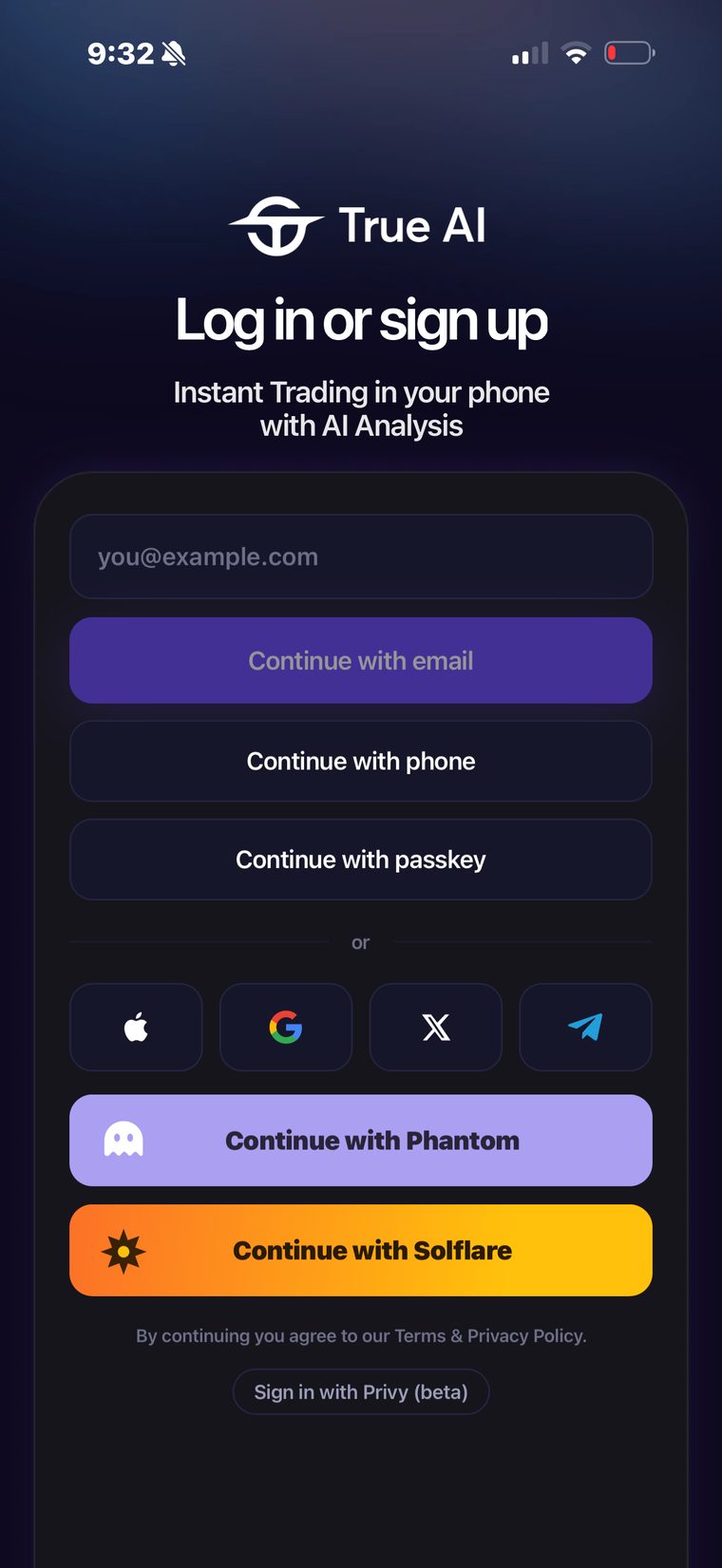
A user who already has a wallet never creates an account. They connect and they trade. A user who has never held crypto signs in with an email code and gets a non-custodial embedded wallet they control, funded by card in the same session. Both land in the same product.
MPC-backed embedded wallets through Dynamic, with Privy running in parallel behind a facade, so a provider outage is not a product outage.
Phantom, Solflare and Backpack connect by deep link; WalletConnect v2 on mobile; wallets already installed on the device are detected and promoted to the top of the list.
The server holds a trade-only delegate. It can route an order and it cannot sweep a balance.
Withdrawals carry code verification and server-side review; deposits arrive by QR, card, Google Pay, Revolut Pay or bank transfer across three on-ramp providers, straight into the user's own wallet.
Anchor program on Solana — custodies USDC, verifies the proof, advances canonical state
Run like infrastructure
Five Raft nodes on dedicated NVMe. Terraform per environment, Flux GitOps, Helm charts in a private registry.
Twenty-eight named alerts across consensus, settlement, proving lag, prover budget, custody outflow and contract state. Six Grafana dashboards provisioned as code. Written runbooks for stop-the-world and voter resync.
Around 175,000 lines of Rust across six production services. The sequencer alone is 93,798 lines with 2,533 test assertions and 26 tagged releases.
Market data fans out over server-sent events and WebSocket with one shared subscriber per market, so venue load scales with markets rather than with users.
The price engine, the market maker, and the console
Where the mark comes from, who quotes against it, and what we see while it runs
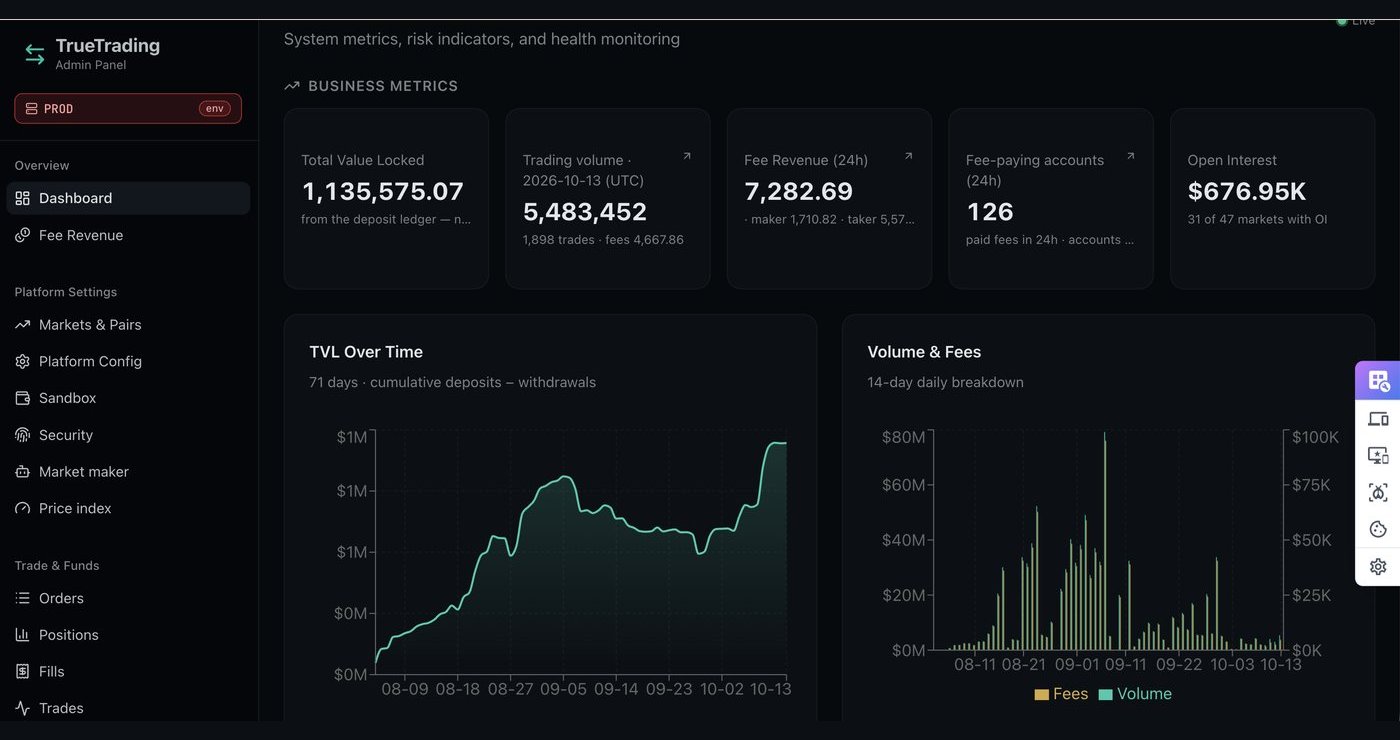
The operator console
The same admin surface the team uses in production. Total value locked, traded volume, fee revenue and open interest, read live from the venue rather than from a reporting layer bolted on afterwards.
The price engine
Live trade streams from Binance, OKX, Bybit, Coinbase and Bitget, plus Pyth and CoinGecko.
One primary per market on priority and health, median when two sources disagree.
Majors carry two independent legs. One feed going quiet does not move the mark.
Sources re-pointed from the console without a deploy. Fourteen markets moved in two minutes on 10 October.
Straight about it: eighteen tokenised-equity markets run on the engine alone today. Widening them is funded in the round.
The house market maker
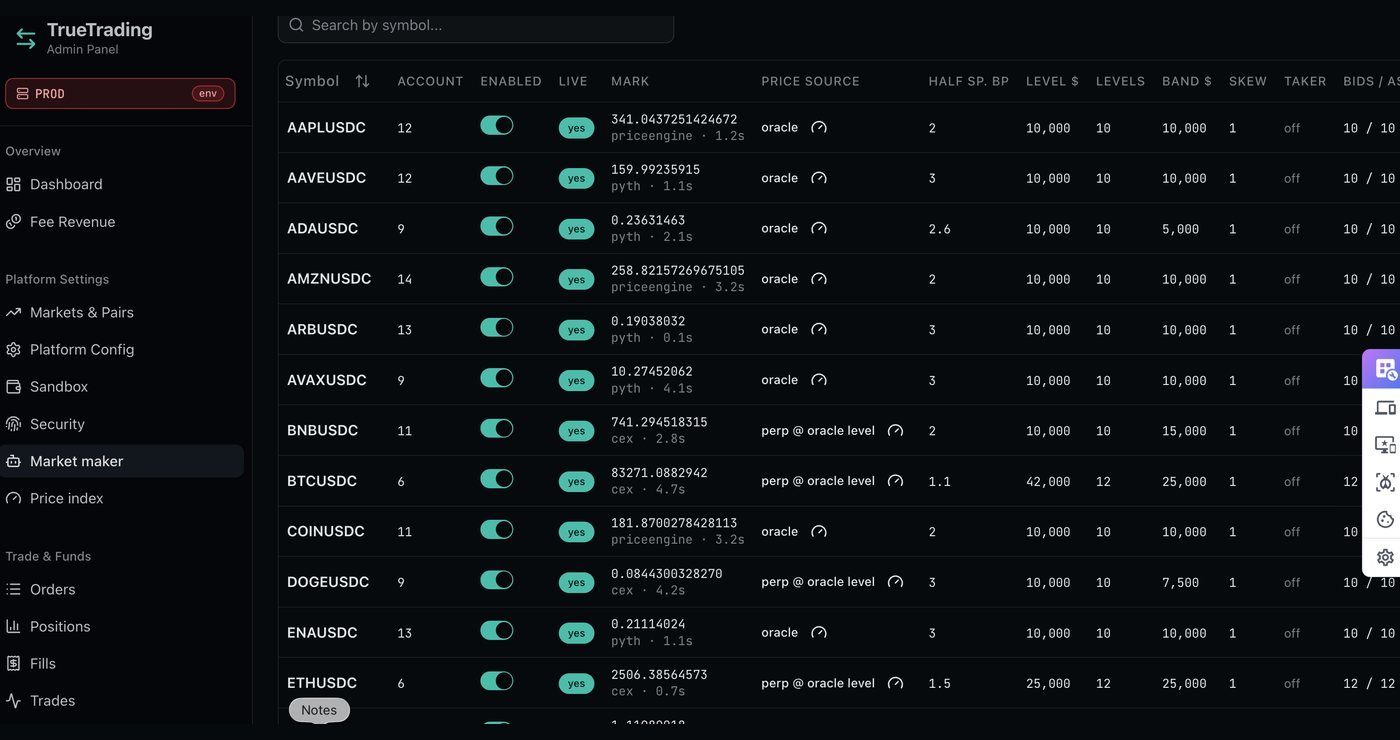
46 markets from seven house accounts, so a new listing has depth on day one.
BTC, ETH and SOL priced off six venues directly, 510 to 660 ms ahead of the venue oracle.
$504k a side on BTC across twelve levels. Half spread 1.1 bp.
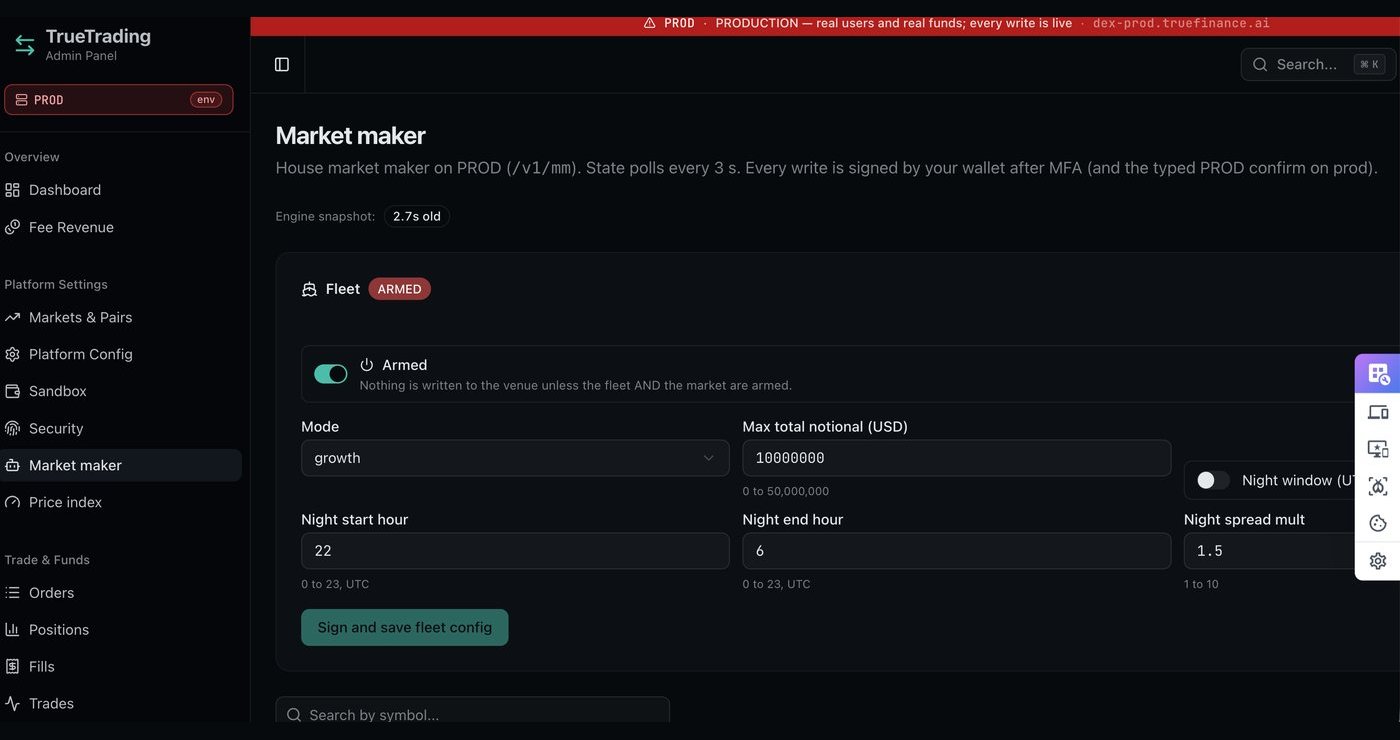
Armed or nothing: every write is wallet-signed after multi-factor authentication.
The $12M order-book allocation funds this book, and it is throttled today.
Latency, proof and block figures are instrumented from the production venue. Market count, leverage caps and fee rates are read live from the venue configuration on 13 October 2026.
The Autopilot journey
Four screens from choosing an agent to funding it, exactly as a user meets them
TRUE offers literally everything
Prediction markets, a full swap terminal across stocks and memes, copy trading, agents, social and the partner engine
The TRUE Card is in the Series A product plan and has not shipped. It carries no revenue in any figure on this page.
Earnings model
How every dollar of activity monetizes — three fee engines on one embedded wallet. All swap and prediction rates are live from the platform.
Perps · live
Perpetuals
0.065% taker
On-chain perps with taker/maker fees plus a funding-rate spread. Live since 4 Aug 2026 — $359.6k of client fees in August.
Taker0.065%
Maker0.02%
Funding-rate spreadancillary
Swaps · live
Spot swap fee
0.71–1.19% / trade
Volume-tiered fee on every spot swap. Blended 0.86% across $59.2M of on-chain volume to date.
Volatile pairs1.19% → 0.71%
Stablecoin pairs~0.50%
Revenue share to partners10–30%
Prediction · live
Prediction markets
3 fee layers
Bridge in, place the bet, share the winnings — stacked on Polymarket liquidity at 0% builder fee.
Bridge into predict wallet0.50%
Placing fee2.0% → 1.19%
Profit fee (on wins)5.0%
What a trading customer is actually worth
Measured from the fee ledger, not modelled from rate cards
Fees per core trader
$3,185/mo
8+ trading days in the month
Revenue per monthly active
$145
$17 → $51 → $145 across Jun, Jul, Aug
Revenue from repeat traders
98.3%
the figure recurs, it is not one-off
Core traders are 38.5% of active traders and generate 92.6% of fees. Because 98.3% of revenue comes from repeat traders, this is a recurring monthly figure rather than a single acquisition event — the basis of TRUE's lifetime-value economics. Stated gross; the 10 to 30% partner revenue share is paid out of fees already earned and sits below gross profit.
Marketing
Where the effort goes, and what each channel is measured on
Where we market
The mix across channels. The budget behind it sits in the round, not here.
60%Partnerships and affiliatesAlready 78% of revenue. Paid as a share of fees that have been earned, so nothing is committed in advance.
30%Direct acquisitionMeta, TikTok, X and direct campaigns, with attribution live since 9 October so every channel is scored on the fees it produces.
10%Brand and above the lineThe smallest share on purpose. Brand follows proof here, it does not buy it.
The channels, live from 13 October
Seven of them, each measured against the fees it produces
Partners and KOLsPaid as a share of the fees their clients generate, weekly, in USDC, on chain
MetaProspecting and retargeting, measured on fees produced rather than installs
TikTokShort form, creator-led, the cheapest reach we have into a first-time audience
XWhere this product is already discussed, and where the crypto-native buyer lives
Direct and CRMEmail, push and in-app, fired against the fee ledger rather than a static list
Brand ambassadorsNamed faces on longer agreements, carrying the product rather than one post
MIDAS contentThe agent speaks, so it can be filmed. Real voice sessions, not a scripted demo
What already works
Partners and KOLs are the larger channel. 78% of September revenue came from partner-referred traders: $482,754 of the month's $620k, on $486.5M of referred volume, across 48 partners who produced fees.
The portal does the selling. Real-time attribution per event, a full funnel view, an earnings simulator and six published levels from 10% to 25%, so a professional traffic buyer sees what the next tier pays before they scale spend.
Retention, not just acquisition. Promotions, loyalty and points run continuously against the fee ledger, which is why 71.1% of August's fee payers paid again in September and 98.3% of revenue comes from repeat traders.
How it will be judged
Fees, not installs. Attribution went live on 9 October and every chargeable event is tied back to the link that produced it, so a channel is scored on the revenue it earns, not on downloads.
The partner line stays variable. It is a share of fees already earned, so the largest part of the budget cannot be spent ahead of the revenue it relates to and carries no funding risk.
The paid line is the experiment. It is new, it is 30% of the budget, and the honest position today is that we have no conversion history on it. The first read is due in November.
Revenue from partner-referred traders
78%
September · $482,754 of $620k
Partners producing fees
48
of 371 with an attributed row
Paid media to 30 September
$0
every account to that date was earned
Of the round, for acquisition
$8.0M
the first marketing budget in the company's history
Partner figures are from the attribution tables for 1–30 September 2026 and are unaudited. The 60 / 30 / 10 split is the management plan for the round, not a committed schedule. Campaign spend from 13 October 2026 is not reflected in any revenue or cost figure on this page.
Customer success, run by an agent
Kira — built in-house, on our own infrastructure. No third-party support software anywhere in the stack.
online 24/7
34sec
Median first response
3,972
Conversations handled
38
Code fixes shipped
99.9%
Resolved
90+
Tools on her MCP server
25–40the age band we build and buy for
Digital natives, always on. No branch, no phone calls, and a position checked like a message.
They trust the system over the salesman. A model's answer beats an influencer's opinion.
Phone first. iOS and Android, 4.8 stars, the same account on the web.
One ticket, end to end — without a human in the loop
Every step below is the agent's own work; humans approve only what moves money
1
Read and classify
Ticket arrives from app, web or Telegram. Kira classifies severity and category and answers the trader in a median of 34 seconds.
34s
2
Investigate against production
Queries the live ledgers directly — balances, fills, trades, PnL, tick data, swaps, perpetual positions, agent rates, points, payouts, prior LLM replies. Not a scripted bot: a reasoning agent with read access to everything.
698
3
Propose an action, or abstain
Reply, code fix, balance correction, identity repair — or abstain and escalate when the evidence does not support a conclusion. She abstained 40 times.
1,958
4
Write the fix and ship it
For product defects she writes the patch and carries it to production. 38 fixes have been deployed from the ticket that reported them.
38
Financials
Everything with a number in it, in one chapter, and where each number comes from
Where every figure comes from
Read this first and the rest of the chapter reconciles
Figure
Basis
Record it is taken from
Fee revenue
Earned in the month, gross of revenue share
Production fee ledger and the perpetual position ledger
Perp notional
Closed-position volume, client accounts only, market maker and house excluded
Venue position ledger
Spot volume and swaps
On-chain re-parse to 15 July, production fee ledger from 16 July
Solana public data and the fee ledger
Revenue share
Earned period, not cash paid; a payment made in one month for fees earned in another is moved back
Payout wallet, settled on chain
Operating expenses
Management cash figures, the only line on this page with no on-chain source
P&L workbook, unaudited
Accounts and monthly actives
Server-side and authenticated, bot traffic removed; guest visitors reported separately
Activity tables
Projections
Management plan, not a forecast of results
Financial model
There are no audited accounts. Every figure on this page is management-reported and unaudited, and an audit is the right condition to attach to this round. Where two of our own records disagree, the month-close pack wins and the difference is disclosed rather than averaged.
1 · Monthly P&L
All figures $k, rounded · core business (token pre-sale excluded) · Sep 2026 = closed month
Full monthly P&L — Jan 2025 to Sep 2026open
2025
2026
Consolidated lifetime — Jan 2025 → Sep 2026
Tech Sal. = dev team salaries · Tech AI = infrastructure, third parties and AI compute · Rev share = fees shared back with the traders and partners who generated them · Others = investor introducer fees (ended Apr 26) + payment-infrastructure partner · the planned $25.0M round is excluded from every figure. Revenue is reported gross (fees charged) and revenue share is shown below gross profit, never netted from the top line.
August 2026 is the crossover month and September is the proof: revenue covers 100% of costs, and every dollar of revenue share was funded by fees already earned rather than by runway. Q3 closes as the first profitable quarter at +$141k. Core OpEx is down 75% from its January peak, to $85k a month.
Pro forma balance sheet
Statement of financial position at 10 October 2026 — no debt, no borrowings, no lease
Projections
Base case — perpetuals at scale, prediction markets, the TRUE Card, Latin America
Monthly revenue — base case to Dec 2026
$k · actuals through Sep, forecast Oct→Dec
The path to $1B
Annual revenue and operating result, $M · management plan
Monthly projection by revenue line — Aug 2026 → Dec 2027open





 online 24/7